
Research
|
Our research focuses on the cognitive control processes that are necessary when automatic behaviors are not sufficient to accomplish goals. Humans have the ability to adapt to novel situations and will change from automatic to controlled behaviors in response to new stimuli. This kind of flexible behavior is critical and necessary to function effectively in our everyday lives. Understanding how we adapt, and the underlying neural mechanisms which allow us to do so, is the focus of our work. Our findings will lead to better theories of how humans perform controlled processes such as selective attention and working memory and, ultimately, to implement better planning and training practices.
We combine sophisticated methodologies such as fMRI, EEG, neuropsychological, and behavioral techniques in order to investigate these abilities in novel ways. Essentially, we emphasize both words in the term "cognitive neuroscience"; that is we attempt to generate and refine theories of cognitive control by understanding how the brain undertakes these functions. In the same way, we test predictions about the functions of neural regions based on theories provided by cognitive psychology. The combination of brain and behavioral data allows us to generate more comprehensive models of cognitive control. |

|
Ongoing lines of research in the Cognitive Control Neurolab include:
a) Interaction of attention and working memory
b) Technology and education
c) Cognitive control and motivation
b) Technology and education
c) Cognitive control and motivation
Attention & Working Memory
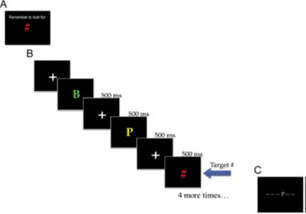
Working memory (WM) is a severely limited resource; thus, it is important that task-relevant information receives privileged access to this system. My research on this core issue investigates the behavioral and neural mechanisms that determining which information is prioritized in working memory. There are several ways that information could be prioritized in WM. For example, WM performance is better for features or items that match an internal task set. This type of attentional effect is called contingent capture and is thought to be due to voluntary attention directed towards the relevant stimulus, as well as a bottom-up capture of attention when the relevant stimulus appears. In our contingent capture experiments, we asked participants to monitor for a red “#” sign and to remember a sequence of differently colored letters. Letters that matched the color of the secondary search goal (e.g., red letters) were remembered better than letters of other colors (Ravizza & Hazeltine, 2013).
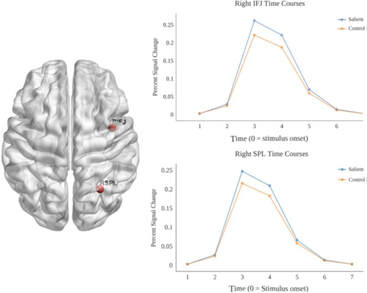
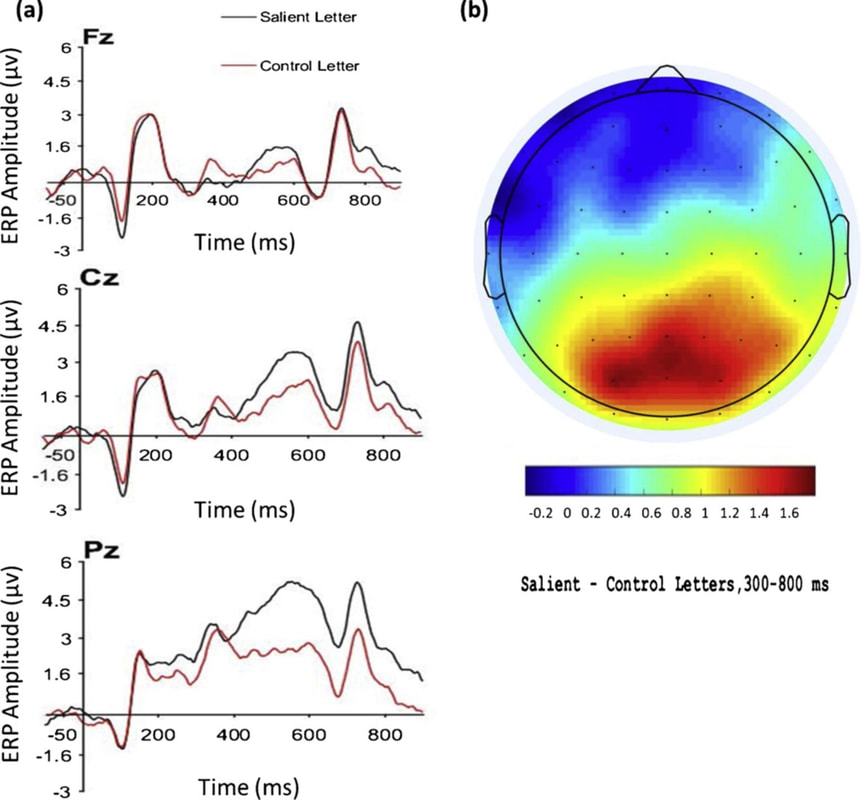
Recently, we have determined that this contingent capture effect is most likely due to the control of voluntary attention rather than the bottom-up capture of attention. We conducted an fMRI study to assess the recruitment of regions involved in the control of voluntary attention and the detection of salient stimuli. We found that regions involved in the voluntary control of attention, rather than salience detection regions, were more active to salient letters (Wills et al., 2017). An EEG experiment provided converging evidence for this claim and showed that salient items were accompanied by a later posterior component (P3) that is associated with cognitive control rather than salience detection (Wills, et al., 2019). Taken together, these results suggest that contingent capture improves memory as a byproduct of increased voluntary attention needed to determine whether the stimulus is relevant to the current task. Technology and Education |
|
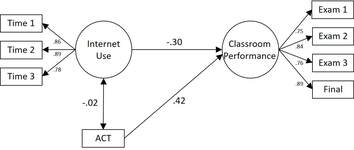
Distraction has always been a problem in the classroom. However, the intrusiveness of such distractions has increased with the popularity of cellular telephones and laptop computers. In a sample of undergraduate students, we examined whether use of these devices for non-academic purposes is associated with lower levels of classroom learning and, if so, whether this relationship was mediated by intelligence. Students in an introductory psychology class were surveyed about the frequency and duration of their use of various portable devices in the classroom. Higher rates of self-reported Internet use were associated with lower test grades for all students, not just those with lower intellectual ability (Ravizza, Hambrick, & Fenn, 2014). A second study examined actual Internet usage rather than self-reported usage. We confirmed the detrimental relationship of Internet use on exam scores. More surprising, we found no evidence that exam grades were related to using the Internet for class-related purposes (Ravizza, Uitvlugt, Fenn, 2017). This work, which has been featured in news outlets such as U.S. News and World Report, Scientific American, and Inside Higher Ed, has challenged ideas that students should be encouraged to bring portable devices to class.
Cognitive control and motivation
|
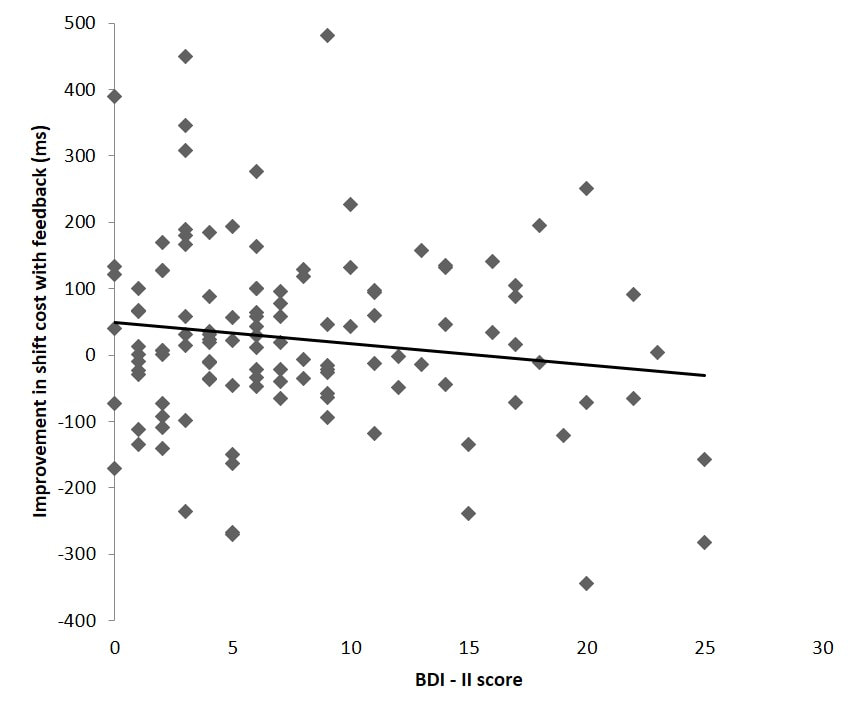
Cognitive control improves when motivation is increased by monetary or non-monetary rewards. For example, WM performance is faster and more accurate when it is rewarded than when reinforcement is absent or low. However, those reporting more depressive symptoms show little or no motivation to improve cognitive control for rewards. We have shown this relationship between depressive symptoms and motivation effects in both healthy younger and older adults who are not clinically depressed (Ravizza et al., 2012; Ravizza & Delgado, 2014). Currently, we are investigating how preference for controlling the environment changes as a result of age and dopaminergic loss from Parkinson's disease. People generally prefer to be in control of a situation; however, changes in reward processing and motivation might diminish this preference.
|